The Lover Archetype; presence, attunement and compassion
The Lover archetype: more than just romance, passion or attachment
Hello friends. Today I’m taking a deep dive into another archetype; The Lover.
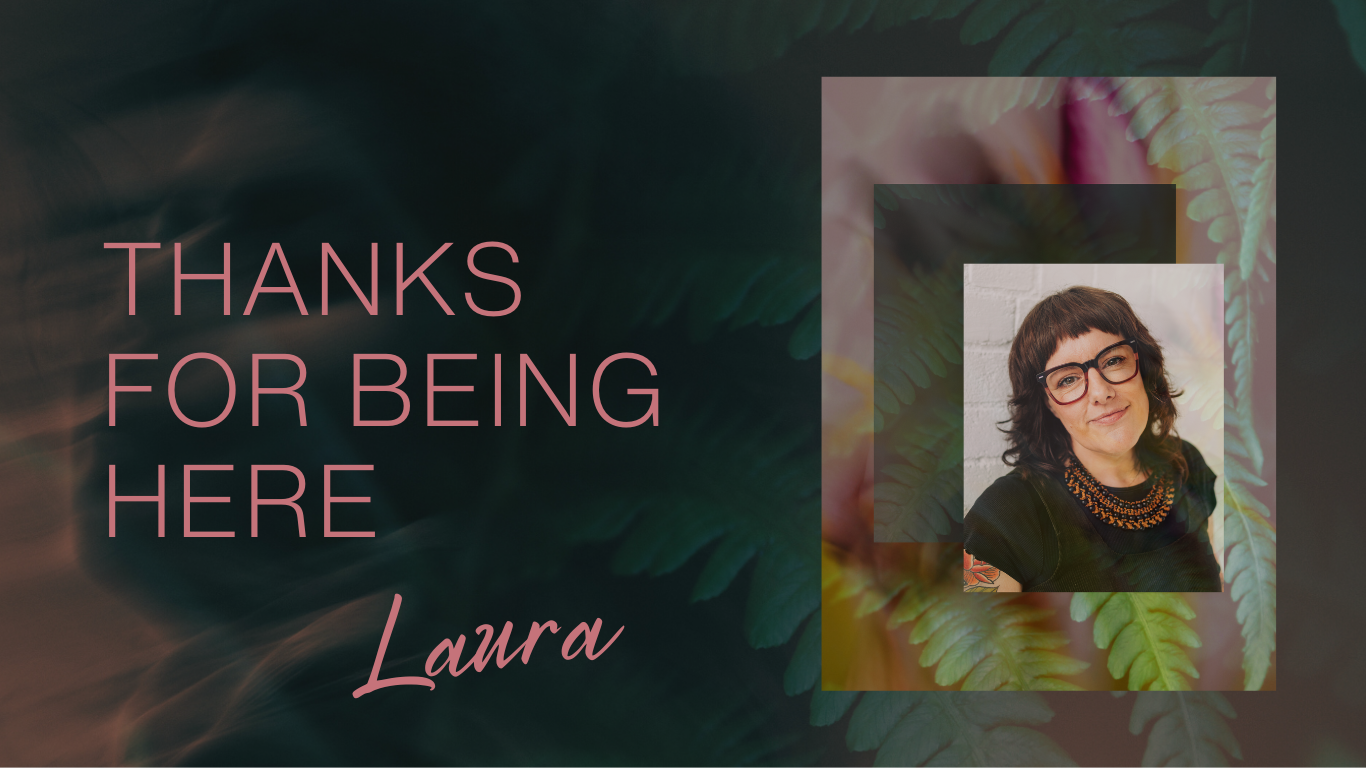
If you’re new here I’m Laura, a counsellor, ecotherapist, and a somatic trauma therapist. My offerings are all about supporting you to connect with yourself and the world around you. I work with archetypes in both my therapy practice and my Sacred Somatic Journeys series, which are audio guided practices that invite you to explore archetypal themes, ritual practice and nature connection, through attunement to the body.
I talk about archetypes and their origins, including where they appear in folklore and psychology, how to work with them and understanding their light and dark aspects here.
The Lover is often misunderstood as only being linked to romance, passion or attachment. When we look at this archetype more carefully, it can be understood as a way of relating to life itself. The Lover points us towards connection, valuation and participation in the world. It is less about who or what we love and more about how we love.
The Lover is one that most of us encounter repeatedly, through film, literature, through society’s messages and through our own relationships. In this post, we’ll explore the Lover through a psychological and spiritual lens, we’ll consider its light and shadow expressions, and I’ll invite you to reflect on love not just as a feeling, but as an ethical and relational practice.
The human drive towards intimacy
In Jungian psychology, archetypes are universal patterns of the psyche that shape how we perceive, relate and act. The Lover, often associated with Eros, represents not just romance but desire, longing, pleasure and suffering. The Lover is our drive for intimacy, which can manifest as connection and presence, but also as longing from afar, over-identification in relationships or difficulty with boundaries. As with all archetypes, the Lover has both integrated and unintegrated expressions.
It is not helpful to judge or shame ourselves for the ways shadow or unintegrated aspects show up. Our patterns often develop for a reason; as adaptations, forms of protection or ways to find safety in our connections with others, when past connections have taught us that relationships aren't safe.
It is also important to consider how our adaptive ways of being are shaped by capacity. As someone who is AuDHD, the ways I show up for others, for community or for myself can be impacted by my neurodivergent experience. What might appear as a shadow trait or defence mechanism is sometimes a nervous system in overwhelm, responding to sensory load.
The same is true for many people living with trauma, energy-limiting conditions or bodies and nervous systems that don't have consistent access to capacity. Shadow work isn't just about accountability but also about context, care and meeting ourselves with honesty and compassion.
Light and shadow expressions
So let’s look at some of the light (integrated) and shadow (unintegrated) aspects of The Lover, while holding awareness of capacity as a factor. As you reflect on how these aspects show up for you, you might ask:
Is the pattern I’m noticing consistent across all of my relationships?
Are there relationships where this pattern doesn’t show up?
Is there a fluctuation in this pattern that links to my capacity?
Is there a fluctuation in this pattern that links to my emotional regulation (i.e does the pattern show up when I’m triggered')
The Lover archetype when integrated:
The integrated or light expressions of the Lover show up as presence and emotional attunement, an ability to stay with ourselves and with others without collapsing or pulling away. This might come with a sense of embodiment and sensuality, not necessarily in a sexual way, but through a felt connection to being alive, being in a body and being in the world. Compassion and care happen naturally, alongside the capacity to value ourselves, other people and the wider world, without needing to possess, fix or merge with them. From this place, intimacy becomes something we can experience while remaining differentiated, rooted in our own needs, boundaries and sense of self, rather than losing ourselves in relationship.
Reflective prompt: where in my life do I feel able to stay present and connected without losing myself? If it feels safe, notice how this shows up in your body. You might sense where boundaries feel clear and supportive, or where care flows naturally in both directions. If bodily sensation is unclear or unavailable, you might instead notice thoughts, impulses, or familiar relational patterns.
The Lover archetype when unintegrated:
The unintegrated expressions of the Lover often show up when our need for connection feels urgent or unmet. We might find ourselves collapsing into others, over-giving or losing touch with our own needs in order to be in connection with others. At other times the shadow can look like withdrawal, idealisation, longing from a distance or seeking intensity without the steadiness needed to sustain it. Desire can become enmeshed with fear of abandonment and intimacy can feel overwhelming or out of reach. These patterns aren’t failures; they’re protective responses shaped by nervous system capacity, past experiences and the conditions we’ve had to adapt to in order to survive.
Reflective prompt: where do I notice patterns of over-giving, longing, withdrawal or intensity when connection feels uncertain? If it feels supportive, notice how your body responds to this question. If bodily sensation is unclear or unavailable, you might instead notice thoughts, impulses, or familiar relational patterns. See if you can meet whatever arises with curiosity and kindness, remembering that these responses developed to keep you safe.
Love in action
We can find the Lover archetype examples in literature, film, tv, music, poetry and pretty much anywhere else we might look. It’s interesting that the lover archetypes that capture our imagination the most are often star-crossed, tragic or ill-fated; Romeo and Juliet, Jack and Rose in Titanic, and even Anakin and Padmé in Star Wars teach us that love’s has power increases with intensity, or when it’s threatened or doomed. What this might do to our psyche is a post for another day.
The balanced Lover Archetype invites us to deepen our capacity for intimacy without losing ourselves. To explore this in an embodied way, check out my latest Somatic Journey: The Lover’s Alchemy. Through somatic and embodiment practices, meditation and reflection, it explores the mythology of the Lady of Shalott, another ill-fated archetypal lover, including themes of longing, reciprocity, boundaries, creativity and connection.
You can find other somatic journeys exploring archetypes, nature and spiritually here.
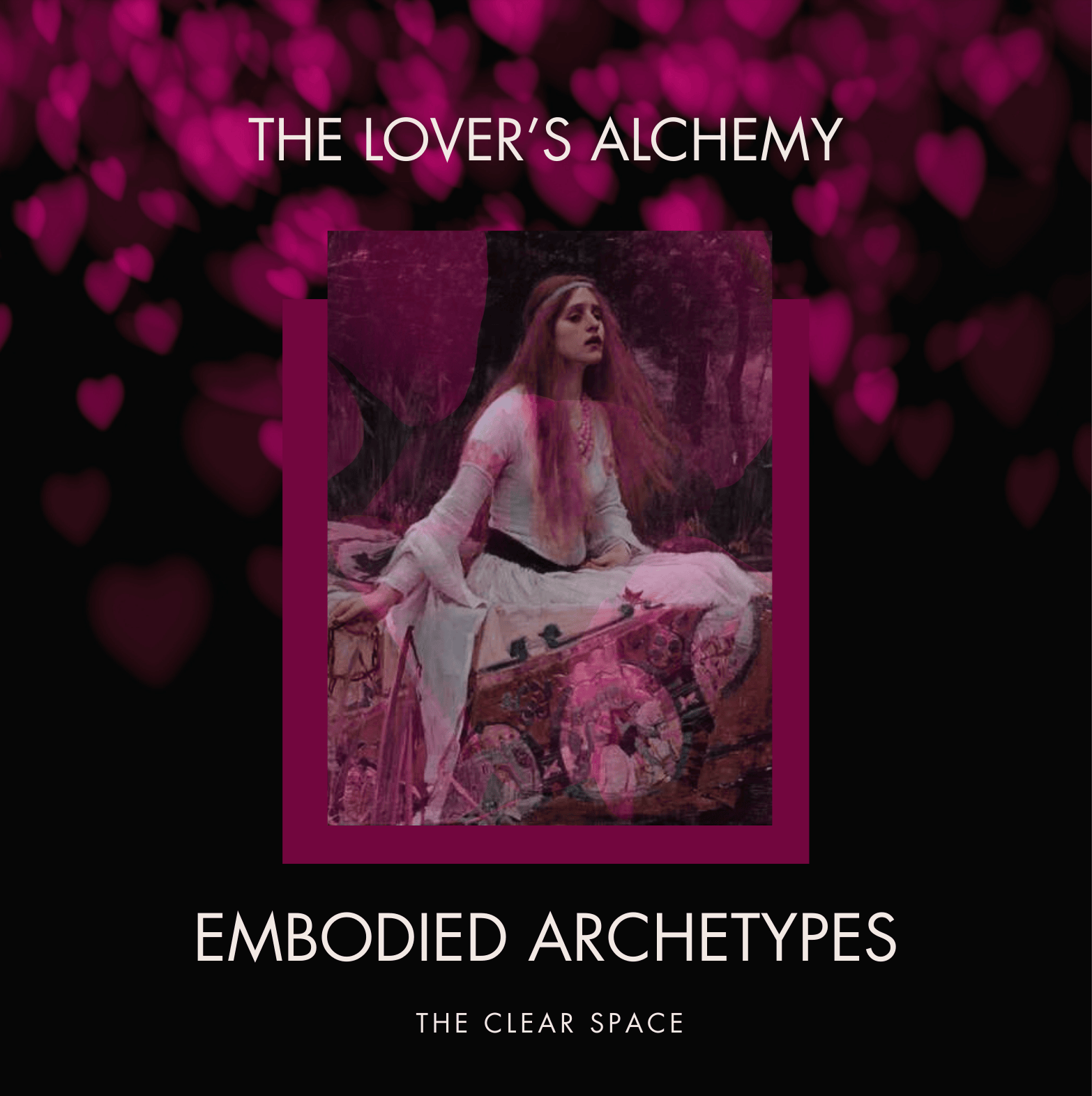
The Lover’s Alchemy is a somatic archetype journey that invites you to explore the story of The Lady of Shalott and her shadow lover aspects. Themes of boundaries, longing and self-abandonment are balanced with joy and creativity, as we also draw on bell hooks’ teachings around love as an active practice.
Other ways to work with the lover archetype
If you’re looking for other ways to work with The Lover, you might:
Attend to relationship patterns: notice recurring dynamics of closeness, distance, longing or withdrawal without judgement.
Practise love as action: choose small acts of care towards yourself, others or the land and carry them out consciously. You can check out this post with reflections on self compassion.
Cultivate embodied presence: engage the senses deliberately as a way of anchoring connection in the present moment.
Explore non harm: reflect on how care, boundaries and responsibility shape your relationships.
Allow love to include limits: recognise that containment and differentiation are often what allow connection to remain nourishing.
Archetypes offer symbolic maps rather than prescriptions. The Lover doesn’t ask us to merge or to abandon ourselves, but to relate with awareness and to offer the same love and care to ourselves that we might offer to others.
The Lover through the lens of bell hook’s work asks us to understand love as a deliberate, embodied practice, rooted in choice, responsibility and care, not just in our intimate relationships but in our relationships to community, society and the Earth. Love, understood in this way, becomes a practice of relating that shapes how we live with ourselves, with one another and with the living world.
Explore The Void Archetype: Endings, Beginnings and Surrender