The Shape Shifter archetype: living between forms
Hello friends. Today I’m taking a deep dive into another archetype; the Shape Shifter.
If you’re new here I’m Laura, a counsellor, ecotherapist, and a somatic trauma therapist. My offerings are all about supporting you to connect with yourself and the world around you. I work with archetypes in my therapy practice, in my Sacred Somatic Journeys series of audio guided practices, and in my Patreon where we explore ritual, seasons and cycles.
I talk about archetypes and their origins, including where they appear in folklore and psychology, how to work with them and understanding their light and dark aspects here.
The Shape Shifter archetype is often misunderstood as being about deception, unpredictability or instability. While these aspects can be part of its shadow expression, this archetype is really about metamorphosis and the multiple aspects of self that we all hold. This archetype shows us the parts of ourselves that move between identities, desires and ways of being. It also asks us to notice how we change, adapt and sometimes live between worlds.
The Shape Shifter is an archetype most of us have encountered in stories, myth and folklore, but we can also find it in our own experience, when we feel the tension between parts of ourselves that want or need different things. This archetype might be especially relevant for anyone who is used to masking or code-switching. Shifting between identities is often a mechanism for safety, but this adaptation can cause tension when the parts of ourselves that we shift between aren’t integrated.
In this post, we’ll explore the Shape Shifter through a psychological and mythological lens, consider its light and shadow expressions, and reflect on what it means to live with change and inner multiplicity. I’m also sharing a couple of guided somatic practices below to support you to explore this archetype.
The human capacity for metamorphosis
In Jungian psychology, archetypes are universal patterns of the psyche that shape how we perceive, relate to others, and show up in the world. The Shape Shifter can represent transformation, ambiguity and the fluid nature of identity. It lives at the threshold between states: human and animal, belonging and exile, certainty and change.
We find The Shape Shifter archetype across cultures and stories. In Celtic Mythology, The Morrígan is an Irish goddess who shape-shifts between different forms; a crone, a wolf, an eel, a woman and a crow. In The Morrígan’s stories, her shape-shifting affects the outcome of battles and the destinies of heroes. In the Táin Bó Cúailnge, an epic from Irish mythology, she confronts Cú Chulainn in multiple forms, with each attempt meant to weaken or distract him in combat. Through her shifting forms, she doesn’t just predict fate she actively shapes it.
We also see shape-shifting stories in fairy tales, film and folklore, where humans become animals or move between enchanted and ordinary worlds. Warewolves, Dr. Jekyll and Mr Hyde, The Chronicles of Narina, The Labyrinth; these stories often mark moments of transition like leaving childhood, crossing into adulthood, or entering unfamiliar psychological territory.
Psychologically, the Shape-Shifter archetype can reflect our capacity to adapt and evolve. Throughout life we change roles, identities and ways of relating to the world. Sometimes this happens intentionally, through growth or exploration. Other times it happens as a response to circumstances that mean we have no choice but to become something new.
Light and shadow expressions
As with all archetypes, the Shape Shifter has both integrated (light) and unintegrated (dark) expressions. This doesn’t have to be a bad thing. Our patterns often develop for a reason; as adaptations, forms of protection, or ways to find safety in our environments. Coming into contact with our shadow parts is an opportunity to reclaim or remember the parts of ourselves we once had to hide to belong, survive, or be loved.
It is also important to consider how our adaptations are shaped by capacity. For many people living with trauma, chronic illness or fluctuating capacity, identity can feel fluid, not because we are unsure of who we are, but because our systems are constantly navigating changing internal and external conditions.
The Shape-Shifter archetype when integrated
The integrated or light expressions of the Shape Shifter archetype might show up as adaptability, creativity and openness to transformation. When we ‘re in contact with this archetype in a grounded way, we can move between roles or identities without losing our core sense of self. Change becomes something we can engage with consciously, rather than something that destabilises us. We might feel able to hold multiple parts of ourselves with compassion, recognising that different aspects of our identity serve different needs.
Reflective prompt: where in my life do I feel able to change or adapt without losing my sense of self? If it feels safe, notice how this shows up in your body. You might sense openness, curiosity or a feeling of spaciousness around identity. If bodily sensation is unclear or unavailable, you could notice what thoughts or memories might be present instead.
The Shape-Shifter archetype when unintegrated
The unintegrated expressions of the Shape-Shifter might show up as instability, confusion or disconnection from identity. We might feel like we’re constantly changing ourselves to fit other people’s expectations or to maintain safety. At other times the shadow expression could look like fragmentation: feeling pulled between competing desires, roles or values without a sense of integration. We might struggle to commit, to root, or to feel at home in who we are.
In some cases the Shape-Shifter’s shadow can appear as hyper-adaptation, where we become good at shifting ourselves for survival but lose contact with our authentic needs. These patterns aren’t failures. They are often the result of living in environments that required us to be highly responsive or adaptable in order to stay safe or connected.
Reflective prompt: where do I notice myself changing or adapting in ways that leave me feeling disconnected from my needs? If it feels supportive, notice how your body responds to this question. If bodily sensation is unclear or unavailable, you could notice what thoughts or memories might be present instead.
Transformation in story
One story that captures this archetype beautifully is the Selkie folklore of Scotland, Ireland and The Faroe Islands. In Selkie stories, seals shed their skin to become human and to live on land. If a Selkie skin is taken from them, they’re remain human, often living a life that never fully feels like their own. Eventually, when the skin is found again, they return to the sea.
This tension between land and ocean can mirror the parts of ourselves that want different things. One part might long for belonging, stability or relationships, while other parts want freedom, to live by instinct, or more wildness.
If you’d like to explore the mythology of the Selkies in an embodied way, check out the somatic practice below called The Selkie’s Skin. This journey explores the story of The Selkie Wife, its mythology and mythology and the Shape-Shifter archetype, as well as themes of metamorphosis. I’ve also shared The Call of The Morrígan, a practice that explores the shape shifting goddess from Irish mythology that I talked about above.
You can find more Sacred Somatic Journeys, my series of audio guided practices exploring folklore, nature and myth, here or in my Patreon.
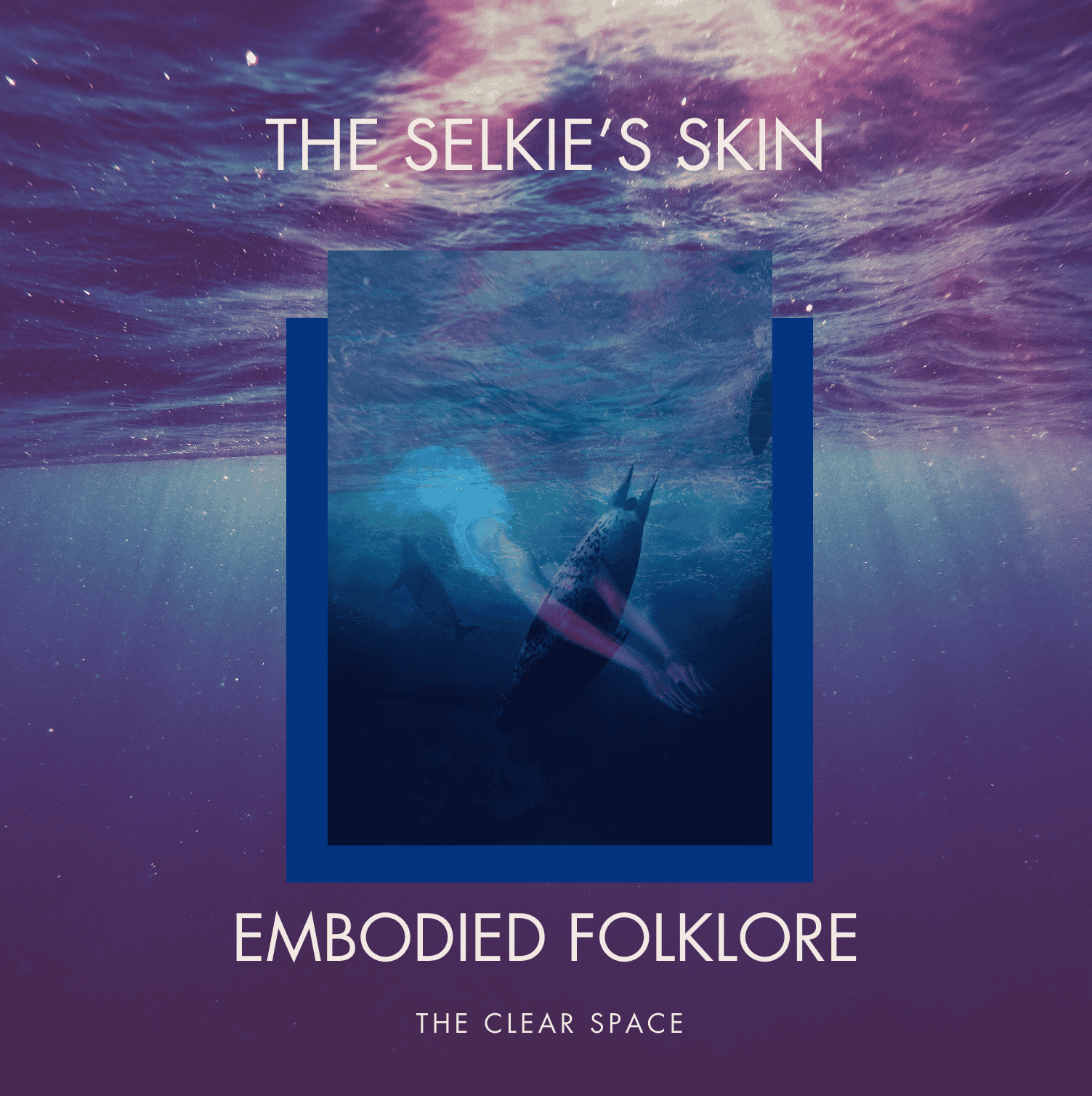
The Selkie’s Skin is a somatic folklore and archetype journey that invites you to explore the mythologie of the Selkies; shapeshifters who change from seal to human by shedding their skin. This practice invites you to release your winter skin and reclaim the desires, strength and wildness that might be ready to emerge with the new season.
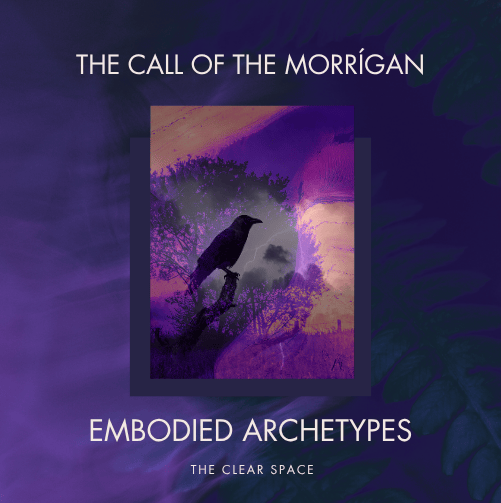
The Call of The Morrígan is a 60-minute somatic archetype journey exploring the three faces of the Morrígna; The Morrígan, Badb, and Macha. Through guided imagery, and embodied awareness, you’ll move through the energies of the void, the womb, and the sovereign, stepping into a space of power and transformation.
This practice supports you in connecting to inner authority, cyclical creation, and the deep wisdom of Celtic myth.
Themes: the Morrígna, sovereignty, the void, the womb, power, Celtic mythology, somatic embodiment.
Includes:
• MP3 audio journey
• PDF script + reflection prompts + ritual guidance
Perfect for lovers of Celtic myth, archetypal work, and embodied spirituality.
Other ways to work with the Shape Shifter archetype
If you’re looking for other ways to explore the Shape-Shifter, you could:
Notice transitions: pay attention to moments of change in your life. Transitions often reveal the Shape-Shifter at work.
Reflect on roles: think about the different identities you hold in your life and how you move between them.
Explore inner multiplicity: allow space for the possibility that different parts of you might want different things.
Work with nature’s cycles: observe how transformation shows up in the natural world through seasons, tides and life cycles.
Practise gentle integration: instead of trying to resolve inner tension, can you stay curious about what each part of you might need?
Archetypes offer a symbolic framework so I would always encourage you to take what resonates and leave what doesn’t. When we learn to listen to the different parts of ourselves, transformation becomes less about losing who we are and more about discovering the many forms our life can take.