Connecting with the full moon, the new moon and the moon’s cycles
The full moon, new moon and other phases: spiritual and archetypal perspectives
The full moon, along with its other phases, has fascinated humans for as long as we've been looking up. It’s guided our calendars, inspired our myths, shaped our rituals and, more recently, invited us to leave the atmosphere of the Earth behind, to explore explore the vastness of Space.
In early 2026, the crew of Artemis II became the first humans to travel beyond low Earth orbit since the Apollo era. The mission and the way it inspired us led to the phrase "moon joy", a collective sense of hope, wonder, and connection.
If you’re new here I’m Laura, a counsellor, ecotherapist, a somatic trauma therapist and a space holder. My offerings are all about supporting you to connect with yourself and the world around you. In this post I’m sharing:
Reflections on the moon and its archetypes
Spiritual perspectives around the moon
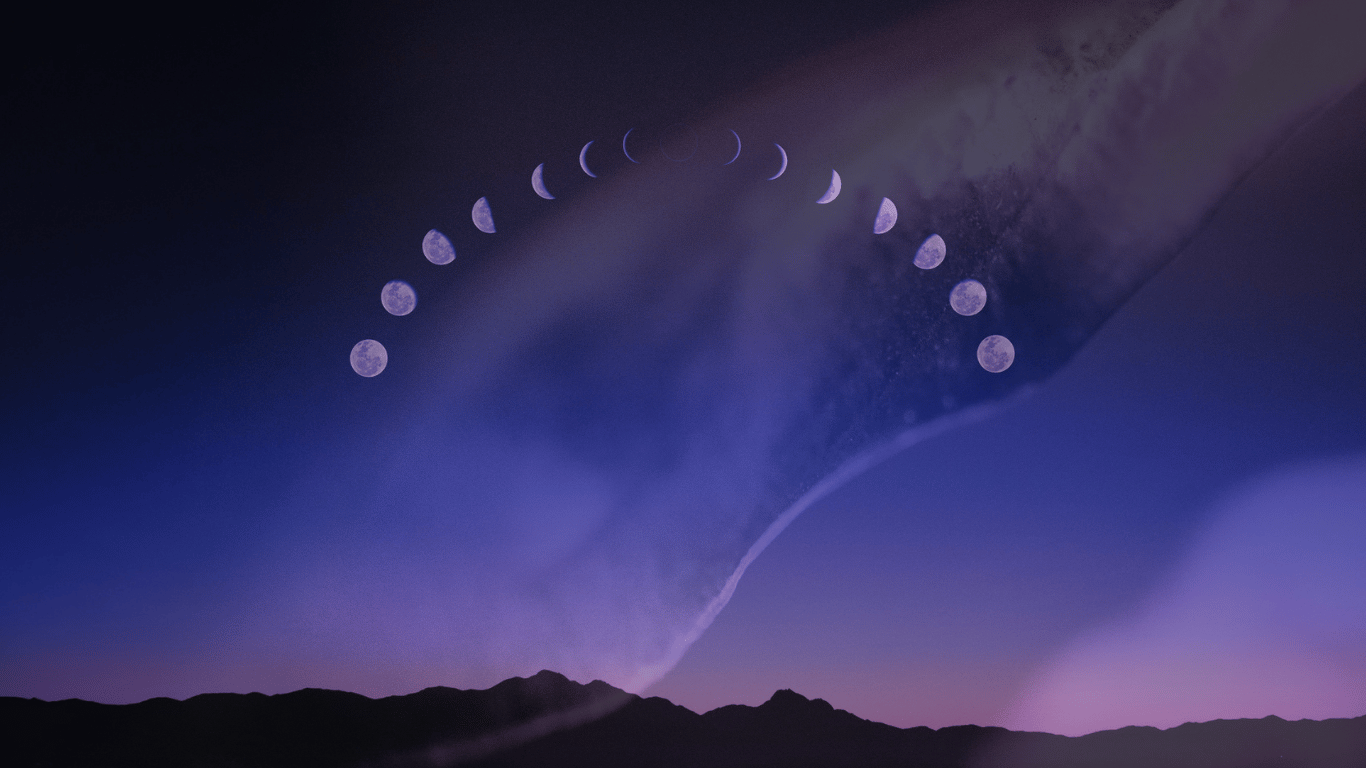
The moon and its phases
Journalling prompts
Additional resources to support you

The archetypal and spiritual energies of the moon’s phases
Wherever we are in the world, we share the same moon. We see it wax and wane above us, whether we notice it or not, we feeling its brightness when it’s full and notice its absence when it disappears into darkness. It is our closest celestial neighbour and, across traditions, it’s been understood as something that reflects our inner world.
As an archetype, it aligns with the cycles of human experience where, rather than representing a fixed meaning, it mirrors the ebb and flow of our lives: beginnings and endings, growth and rest, illumination and mystery. The moon can also represent the embodiment of feminine energy, which we all have within us irrespective of gender. When exploring the archetypal energy of the moon we can also think of it as a mirror, illuminating areas of our lives that may be hidden or in shadow, bringing them into conscious awareness for integration.
The moon has also held spiritual significance for many cultures. Egyptians honoured the moon god Khonsu, the Greeks looked to Selene, and in Philippine mythology Mayari is one of many moon deities. Countless other traditions have woven lunar imagery into myth, folklore, and ritual, whether that’s through story, symbol, or spiritual practice.
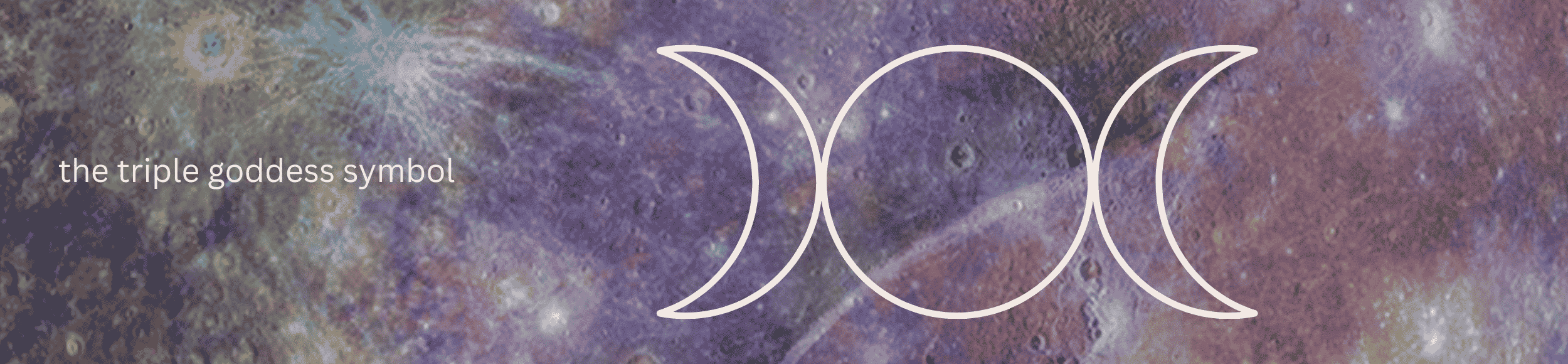
In modern Pagan and Wiccan traditions, the Triple Goddess (below!) is a symbol that represents the cyclical nature of life, the changing phases of the moon, and the many expressions of the feminine.
The three aspects are:
The Maiden or, as a non-gendered alternative, The Initiate (Waxing Moon). Representing beginnings, youth, curiosity, growth, independence, and possibility.
The Mother or, as a non-gendered alternative, The Caregiver (Full Moon). Symbolising nurturing, abundance, fertility, compassion, protection, and creation.
The Crone or, as a non-gendered alternative, The Sage (Waning Moon). Representing wisdom, transformation, endings, intuition, and release.
In addition to these three phases, another significant phase of the moon’s cycle is the New Moon. We can connect this to the archetype of The Seed, which symbolises potential, dormancy and the fertile void where growth begins. Just like The Wheel of The Year, the moon and its cycles remind us that life isn’t linear.
You can work with the moon’s archetypes and energies by following its shifting rhythms, noticing whether each moon phase mirrors or opposes your own inner cycles. You’ll find some journal prompts to support your exploration at the end of the post.
The New Moon, the Waxing Moon, the Full Moon, and the Waning Moon
In sharing reflections on the energy of the moon’s phases, I’ve linked them to the corresponding solar phases/seasons, and the festivals that are celebrated throughout The Wheel of The Year. I think it’s beautiful that both the moon and sun wax and wane, albeit on very different timelines.
The New Moon: the beginning. A dark, generative void and space of rest. Just like winter, which includes the festivals of Yule and Imbolc, the New Moon asks us to rest the darkness. In this inwardly focussed space we can dream, allowing our intentions to form in the dark, while we imagine what we might create when the light returns.
The Waxing Moon: the return of the light. In Spring we celebrate the Equinox or Ostara, which also honours the return of the light. There is also the Spring festival of Beltane which celebrates the power of the returning sun. The return of the light is equally important in this moon-phase. Anticipation starts to stir, ideas take shape, and we can begin to gather resources.
The Full Moon: the point of illumination. Just like the high summer celebration of Summer Solstice, this phase is all about the peak of intensity. What was once hidden becomes visible and we might find that our sensitivities are heightened. This is a threshold moment where we can acknowledge, honour, or release anything we’re letting go of, to make space for the new.
The Waning Moon: a space for integration and preparation. Like the late summer/early autumn festival of Lammas or Lughnasadh, this phase shifts us into gratitude and integration. After the peak, we begin to process. Just as we do at the Autumn Equinox, or Mabon, we might notice the absence of light here, as it wanes. This softens into the last phase of the waning cycle, which aligns with the energies of late autumn and early winter. This last phase asks us to let go.
And then the cycle begins again.
A guided somatic practice to connect with the moon during any of her phases
I’ll be sharing a guided somatic practice to connect with the moon during any of her phases very soon. My somatic journeys series are immersive audio-guided practices that explore ritual, archetypes and nature. Each somatic embodiment practice offers a trauma-informed, identity-affirming and neurodivergence-friendly space to reconnect with yourself, cycles and seasons and the natural world. While you wait to explore The Moon and Her Phases, you can check out my other practices here. You’ll also find some journal prompts to explore below.
Moon journal prompts for reflection
The New Moon
What is forming within me that isn’t quite ready to emerge yet?
Where in my life am I being invited to rest, soften, or let go of doing?
What might shift or change if I trust the darkness as fertile instead of empty?
The Waxing Moon
What feels like it is starting to stir or return in my life right now?
Where am I noticing small sparks of energy or curiosity?
What can I start to gather, tend, or experiment with as things start to grow?
The Full Moon
What in my life is fully visible or illuminated right now?
Where can I witness, honour, or acknowledge something that has come into completion?
What am I ready to release now that it’s been fully seen?
The Waning Moon
What am I integrating from this last moon cycle?
Where can I offer gratitude for what I’ve learned, received, or completed?
What feels ready to be laid down as I move back towards rest and darkness?
Remember, journaling is a personal practice, and there are no right or wrong answers.
To explore working with archetypes more deeply, check out this post. You might also like to check out my Sacred Somatic Journeys series that explores spiritual and nature based archetypes through a somatic and embodied lens.